

Quick Takeaways
|
In U.S. kitchens, the storage game is changing. A new EPA analysis says the old “$1,500 per family” waste figure is out of date, with many food prices up more than 50 percent since 2010, and ReFED’s 2025 report puts national surplus food at about 31% of supply, worth roughly $382 billion. That kind of loss turns smart disposable containers into a real cost decision, not a side note.
People are also weighing safety and cleanup. FDA and USDA guidance favor fast cooling in shallow containers, into the fridge within two hours at 40°F or below, and recent work shows food cooled at about two inches depth stays in a safer zone. On the heating side, studies find microwaving some plastics can shed micro and nanoplastics, which is why many home cooks are looking at fiber based, vented lids that handle steam and reduce leaks.
This guide sticks to simple tests that matter at home, fresher taste after a night in the fridge, fewer leaks in a bag, faster cleanup, and fewer spoiled meals. We will compare daily use, show where disposable fiber designs save food and time, and keep every claim grounded in current data.
The Real Cost Of Food Storage Failure
Food waste in the United States is about 31 percent of supply, worth roughly $382 billion a year. That is not a rounding error. It is a household balance sheet problem.
For families, the hit is clear. The EPA estimates $728 per person each year in food you buy and never eat, about $2,913 for a family of four. Small gains in storage and reheating habits move real money.
A big driver is cooling and storage done late or done deep. Federal guidance says move leftovers into the fridge within 2 hours, keep the fridge at 40°F or below, and divide into shallow containers so food drops through the danger zone faster.
Dana Gunders, president of ReFED says that
“Despite record high food prices, and increased awareness of the food waste challenge, our analysis shows that surplus food remains high and we are still far off from meeting the 2030 reduction goal to halve wasted food.”
Disposable vs Reusable: What Actually Wins In Daily Use
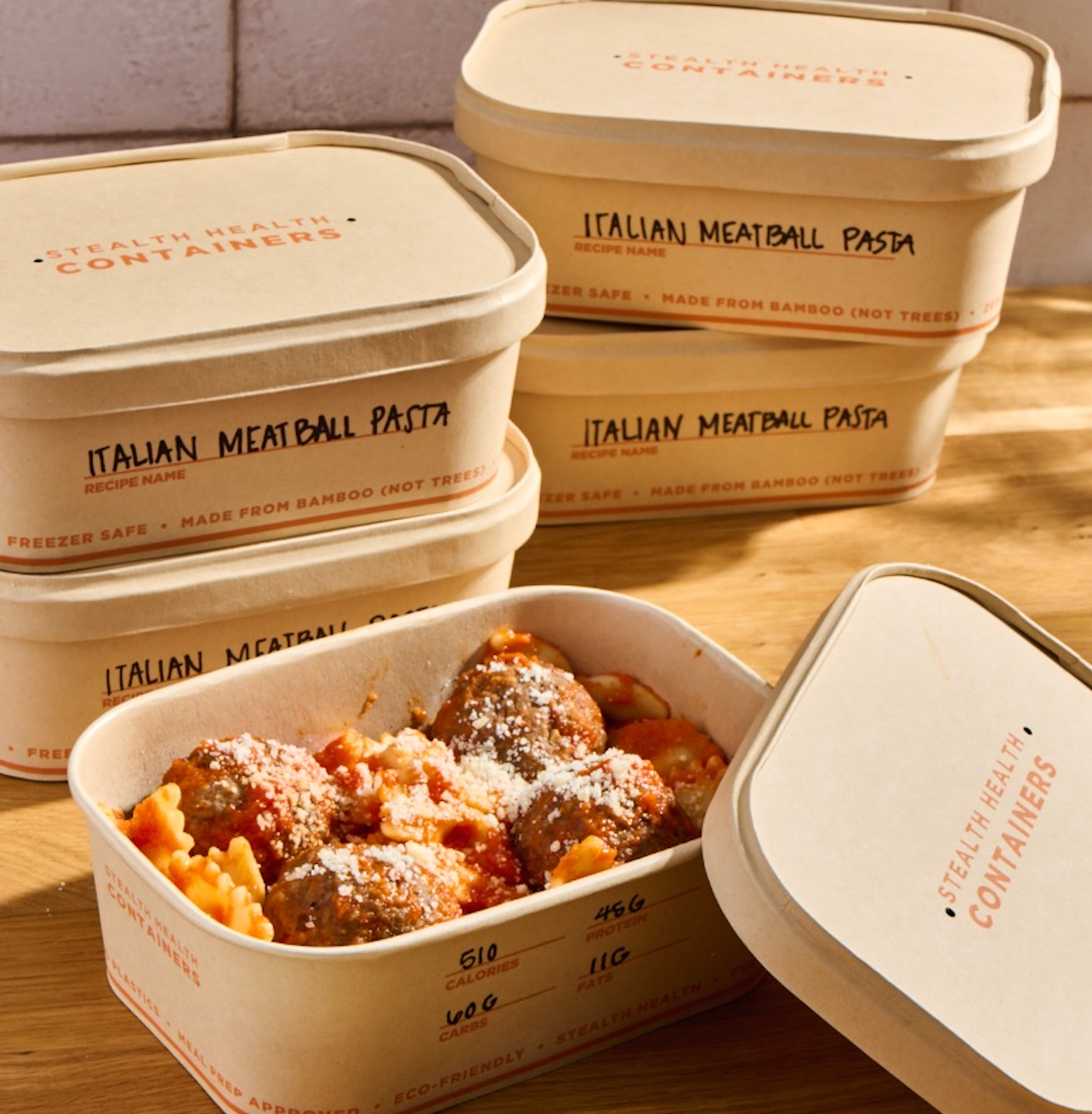
Weeknight reality beats theory. Smart disposable containers cool fast, vent steam cleanly, and seal tight so soups and sauces stay put. Brands like Stealth Health Containers use fiber lids with small vent tabs to keep steam in check. If you want the best meal prep containers for real life, shallow portions plus vent tabs win on freshness and speed.
Reusable meal prep containers have strengths, but time, cleaning, and lid fit get in the way. Many home cooks now prep in smart disposables and reheat safely without heating plastic. If you still love meal prep containers glass for storage, use them for cold hold and rely on vented disposables for reheat and carry.
Head to Head for Everyday Meal Prep
| What You Care About | Smart Disposable Containers | Reusable Plastic or Glass | Why It Matters |
|---|---|---|---|
| Cool down speed | Shallow fill and low headspace drop temperature fast | Deep vessels cool slower unless you split portions | Faster cooling helps food last and taste better next day |
| Reheat workflow | Built-in vent tab manages steam and stops lid pop | Works with perfect lid fit, many users crack lids | Controlled venting means fewer leaks and soggy spots |
| Microwave exposure | No heating of petroleum plastics during reheat | Microwaving plastic can shed particles | Many cooks prefer non-plastic reheat for peace of mind |
| Freezer performance | Low headspace plus rigid walls protect texture | Overfilled tubs trap steam and may warp or crack | Texture after thaw decides if the meal gets eaten |
| Odor and stains | Smooth fiber interior reduces carryover | Scratched plastic holds tomato stains and fridge smells | Clean taste keeps leftovers appealing |
| Time and cleanup | No wash step after use | Hand wash or dishwasher time adds up | Less friction means you stick to meal prep |
| Real-world impact | Works even when schedules are tight | Wins only with high reuse and efficient washing | Break-even depends on reuse count and wash habits |
Safety And Material Science In Plain Words
Safe storage is physics and timing. Hot food should pass through the danger zone fast. The FDA Food Code sets a two stage target: drop from 135°F to 70°F within 2 hours, then to 41°F within 6 hours. Shallow portions and air flow around containers make that happen. That is why the best meal prep containers use shallow geometry and vent paths to move heat out quickly.
Microwave heat is about steam management, not brute force. A small vent lets vapor escape so lids stay seated and reheats stay even. Many cooks avoid heating plastic in the microwave because studies show some plastics can shed micro and nanoplastics when exposed to high heat. Smart disposable containers with fiber lids help you reheat cleanly and keep texture tight. See our Instructions & Use guide for step-by-step reheating.
Freezer burn is sublimation plus oxygen exposure. Low headspace and a tight seal limit moisture loss and keep flavor intact on thaw. If you use meal prep containers glass for long holds, leave expansion headroom and seal hard to reduce drying at the surface.
How Smart Disposables Reduce Spoilage
Freshness drops when heat and air hang around. Smart disposable containers use shallow portions and low headspace so cold air can reach the center fast and steam can escape through a small vent. That simple setup keeps next day taste tight and makes the best meal prep containers work like a system, not a guess.
Freezer quality is air control. Tight lids and low headspace limit ice crystals and surface drying so meals thaw close to how you cooked them. If you prefer meal prep containers glass for long holds, leave a little room for expansion and seal hard to reduce oxygen exposure.
Heating is about steam management. A small vent keeps pressure in check so lids stay seated and textures stay intact. Many cooks avoid heating plastic in the microwave because studies show heating can release micro and nanoplastics. Smart disposable containers and fiber lids let you reheat cleanly and move on.
Environmental Reality Check
Reusable only wins after enough turns. A 2024 EU JRC analysis shows break-even at about 20 to 40 reuses depending on the dataset, and results flip with recycling rates and transport. In one case, single-use beat multiple-use until carton recycling hit about 75%.
Washing and returns decide the math. Peer-reviewed LCA work finds payback is highly sensitive to dishwashing heat, frequency, and grid energy, and to extra miles in take-back loops. Hot washes and long routes push the footprint up fast.
Recycling won’t rescue low reuse. Globally, only about 9% of plastic is recycled, so the cleaner move at home is the setup that prevents waste now. If you can’t hit 20+ clean reuses with efficient washing, light fiber single-use can deliver a lower impact per meal saved than heavy reusables that sit idle.
Cost Math You Can Feel
Waste is a bill you can cut fast. Use smart disposable containers to save meals that would have been tossed, and the dollars stack up quicker than small price gaps between containers.
Here is a simple formula you can use at home: meals saved per week × average meal cost × 4. That is your monthly savings with the best meal prep containers you will actually use.
Here is the quick snap.
| Household | Meals Saved per Week | Average Meal Cost | Monthly Savings |
|---|---|---|---|
| Solo | 2 | $6 | $48 |
| Couple | 3 | $7 | $84 |
| Family of 4 | 5 | $8 | $160 |
Even if smart disposable containers cost $0.50 more per use, the net still wins when you save just 2 or 3 meals a week order meal prep containers when you finalize your plan. If you prefer reusable meal prep containers or meal prep containers glass for cold hold, keep them for storage and use vented disposables for reheats and carry.
Certifications And Labels That Matter
- ASTM D6400 or EN 13432 means industrial compostable material that breaks down in the right facility
- TÜV OK compost HOME means lower temperature breakdown that can work in home compost conditions
- BPI certification means third party validation of compostability claims for the U.S. market
PFAS free claim means no added fluorinated chemicals for oil and leak resistance in meal prep containers - FDA food contact compliant means materials meet 21 CFR requirements for safe contact with food
- USDA Certified Biobased means a verified percent of plant content in smart disposable containers
- Microwave safe means the container and lid are tested for heat and steam without deforming
- Freezer safe means the container resists cracking and seals stay seated after freeze and thaw
- Clear sorting guidance means labels that show industrial compost, home compost, or trash to cut contamination
Myths vs Facts
| Myth | Fact |
|---|---|
| Reusable always beats single use | Only if you hit high reuse counts with efficient washing; smart disposable containers can win when reuse slips. |
| Deep tubs keep food fresher | Shallow portions cool faster and cut spoilage; low headspace is the quiet win. |
| Any tight lid is fine for reheats | You need a vent path; controlled steam keeps lids seated and textures intact. |
| Freezer burn is about low temperature only | It is air plus time; tight seals and minimal headspace protect texture. |
| Microwave safe means any plastic is a good idea | Many cooks avoid heating plastic; use vented smart disposable containers or ceramic for clean reheats. |
| Glass is always the best meal prep container | Meal prep containers glass are great for cold hold; for fast cool and travel, vented disposables usually win. |
| Labels do not matter | Compostable standards, PFAS-free claims, and food contact compliance separate good meal prep containers from guesswork. |
How To Pick The Right Size And Shape
The right size beats guesswork. Match the container to the meal, keep headspace low, and stack so cold air can move. That is how the best meal prep containers keep taste and texture for tomorrow.
Pick shallow for hot foods, split big batches, and use inserts for sauces. If you like meal prep containers glass for long chill, keep them for cold hold and use smart disposable containers for reheat and carry.
Here is the quick size guide
| Meal Type | Best Fit | Portion Target | Why It Works |
|---|---|---|---|
| Grain bowls and mains | 24 to 28 oz rectangle | 2 to 2.5 cups | Shallow bed cools fast and stacks flat. |
| Soups and stews | 16 to 24 oz round | 1.5 to 2 cups | Tight lid and low headspace reduce spills and soggy texture. |
| Pasta and stir fry | 24 oz rectangle | 2 cups | Broad surface reheats evenly with a small vent. |
| Protein plus sides | 28 to 32 oz 2 compartment | 3 cups total | Keeps textures separate and controls moisture. |
| Salads | 24 oz rectangle plus 2 oz insert | 2 cups greens | Dressing insert protects crunch and flavor. |
| Snacks and sides | 8 to 12 oz small | 1 to 1.5 cups | Fills fully to limit air and drying. |
| Freezer batch | 28 to 32 oz rectangle | 2.5 to 3 cups | Low headspace guards against ice crystals on thaw. |
FAQs
How long do leftovers last in the fridge?
Plan on 3 to 4 days if you chill fast and keep the fridge cold. When in doubt by day 4, move it to the freezer.
What causes freezer burn and how do I stop it?
Air and time dry the surface. Fill to reduce headspace, seal tight, and hold at 0°F.
Is microwaving plastic a problem?
Studies show microwaving some plastics can release micro and nanoplastics. Many cooks reheat in fiber or ceramic instead.
What are the safest cooling rules?
Food Code target: 135°F to 70°F within 2 hours, then to 41°F within 6 hours. Shallow portions help you hit it.
Which certifications matter for compostables?
Look for BPI with ASTM D6400/D6868, or TÜV OK compost HOME when relevant.
Are glass meal prep containers better than smart disposables?
Use glass for cold hold. For fast cool, clean reheat, and carry, smart disposable containers with vents and tight seals are easier to use daily.
How should I portion for quicker chilling?
Go shallow. Split big batches into smaller containers and space them so cold air can move.